

Is That All There Is? Corrected version 😳, Trash The Previous One
It doesn't mean what you think it does. And I'm still as bad a proofreader as I ever was.

[Part of this post appeared in the sermon I preached at Canaan Congregational Church last Sunday]
While watching the HBO show “Hacks” recently, I heard the song “Is That All There Is?”
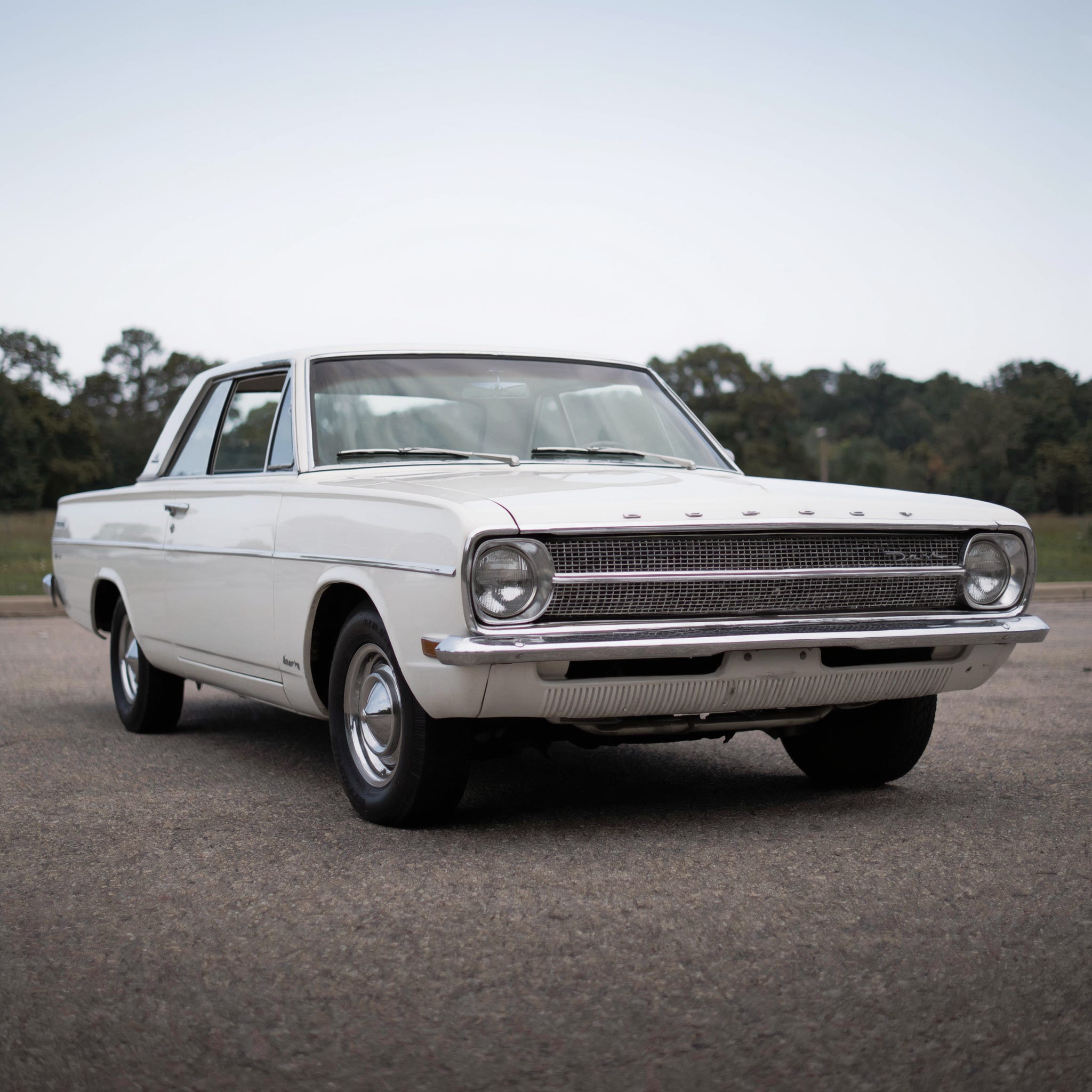
Music being the magic teleporter that it is, I was rocketed back into the shotgun seat of 1966 Dodge Dart with my father driving. The car smelled like smoke. He was a Boston Fire Chief and he smelled like smoke a most of the time. I was at Boston University at the time and, when I would go home, I would often meet him at the Egleston Square fire station and bum a ride.
A song was playing on the car radio from some scratchy AM station. Peggy Lee, from my father’s era, had a bona fide hit with “Is That All There Is?”, so I would peg this sometime in the fall of 1969.
I almost always trusted my father’s musical taste. He was a very good singer, with a caramel baritone voice, he played guitar, and always entertained at family get-togethers. I think I had my hand on the radio dial, ready to change the station when he said:
“No, no. Leave it. I like this song.”
“You like this song?”
Instead of replying, he started singing along with the chorus:
Is that all there is?
If that’s all there is, my friends, then let’s keep dancing
Let’s break out the booze and have a ball
I thought this was lunacy. I was nineteen. Songs from Abbey Road were hoarding all the top spots on the charts and “Honky Tonk Women” had just been dislodged from owning the #1 position after being there for eight weeks. Who was this washed-up Big Band singer croon-talking what sounded like the last number the band played on the Titanic as the water lapped around their ankles?
To my father’s great credit (he was in his late 40s at the time), he didn’t say anything like “one day you’ll appreciate this song,” or “one day you’ll understand this song.” Because who knew? I could still think that sucked decades later.
I simply remembered that he, inexplicably, liked it. That lodged in my mind. As the inexplicable often does.
The morning after hearing the song …
… I went down to my little studio, fired up the computers, put on the headphones and located the song on Spotify. (Yes, sacrilege.)
I was stunned.
I could not believe how, in the past fifty or so years, this song became so good. Not just good, transcendent. Peggy Lee’s voice is bourbon velvet, a voice aged in oak barrels of disappointment and desire. The string arrangement is by a very young Randy Newman. And the banjo is the best use of the instrument since my next door neighbor swung a 1930s Gibson Mastertone at a would-be burglar.
I listened (and I also watched a live video from 1969) probably four or five times. I felt like I was in Weimar Germany and the Empire Room at the Waldorf Astoria had been re-located to Berlin. Or I was standing in the wings on the opening night of Cabaret. Or I was really hearing “Send in the Clowns” for the first time and recognizing the devastating wound it opens up.
It is world-weary and elegant at the same time. It also just barely threads the line between nihilism, despair, and action in face of hopelessness.
“Is That All There Is?” or translated, “Is This All There Is?” is a question that has followed me around ever since I can remember.
Once this idea enters your consciousness, it only leaves for the briefest of periods. It becomes the hum of the alternating current in your brain.
It becomes a companion, a sidekick. Like Churchill’s black dog.
Nihilism can be a very seductive philosophy. If nothing really matters, you don’t have to risk commitment, which means you don’t have to risk disappointment. And once you stop believing things can be fixed, destruction begins to feel righteous. It is easier to tear down a department, an agency, a university, a newspaper, or a democracy than it is to make one work. If all institutions are corrupt, there isn’t any need to improve them.
I remember looking out the floor-to-ceiling windows of an office overlooking Boston’s Back Bay. I had a good job that paid well. I got to travel to places I would never have seen were it not for that job. I had arrived at the target I had blindly shot my arrow at a decade before. Bullseye!

I would love to say the song “Is That All There Is?” went through my mind as I looked out the window. It didn’t. But an inchoate feeling of what that song conveys did. I was at a fork in the road. I could either ride this and pad my 401(k) for the next couple of decades, dying a little bit every year, or I could take a different road.
That’s how I see “Is That All There Is?” When that question pops up, it usually means that whatever road you’ve been traveling, even if it has been a good road, is ending. You might not see the ending just yet.
But trust me, every road eventually runs out.
Twenty years later, I found myself in an empty church sanctuary, thinking about ways to keep filling up the pews, keeping my fingers in the dike of the unstoppable reservoir of secularism that would eventually drown everything and—no, I didn’t think “Is That All There Is?” I thought: this has been a great road, I’ve had great companions. But I have to find a new road now.

I’m glad this question has black-dogged me all my life. Sure, there’s the occasional afternoon (or month) when nihilism descends like the November fog here in the Berkshires. And each day is a slog. And then, one day, you wake up and you feel a little lighter. The fog turns to mist. The sun starts to shine through the mist.
It is, I know after all the years, a rhythmic, sine-wave kind of thing. Doves don’t fly over the house in the sign of a cross, rainbows don’t start appearing over the Taconic Ridge. Bluebirds of happiness don’t dance on the railing of the deck.
Culturally, politically, spiritually, I believe we are at the trough of the sine wave. We have been battered and bruised for so long we don’t even know which way is up.
So those groans you hear? They’re part pain, but they are also part of the awakening of the human urge for Life, that power to affirm—even in the face of things that don’t seem to have any meaning—that life and creativity eventually wins out over depravity.
I think we may be in one of those “Is That All There Is?” periods right now.
Many of the things we thought were settled are now teeteringly fragile. Character traits we valued—integrity, compassion, truthfulness, kindness—are laughed at as weakness.
So, I’m going to do what my old man did for me. I’m just going to lay it out there. Say: here’s this song. I like it a lot. No other comment on my process, with one caveat:
It’s about beginning again. Not everything falling apart.
So raise a glass to what went before. Do whatever dance you want out on the dance floor.
But, dammit, this is not all there is. And I’m not talking about a heaven or hell or … wait, whatever happened to Limbo?
I mean there is so much more we are capable of. We still have more kindness, more courage, more imagination. More repair.
Tikkun olam.

I won’t have any new releases for a little while.
I’ve signed a distribution agreement with Soothe Sounds in Australia, and I’m excited about what comes next. I’ve been wanting to spend more time exploring both ambient and jazz music, and they’re fully behind that direction.
Over the next few months I’ll be writing, recording, and preparing a series of releases for the fall.
In the meantime, here’s a new ambient piece, The Quiet That Followed. As always, the full track is available as a free download on Bandcamp
No paywall—ever. If this piece speaks to you, share it.
In our personal lives as we approach the end of thid portion of the never ending journey it may not be a bad thing to recognize that "enough" is a good answer to "Is that all there is". After visiting some monistaries in Nepal in the remote regions of the Himalayas the Buddist philosophy may have it right that this micro second in time is enough.