

The Exile of Aging: Nostalgia, Home, and the Country We’ll Never See Again
On memory, homesickness, and becoming a stranger to your own world

I. Age and nostalgia
At a certain point, if one is fortunate to live long enough, time becomes almost physical.
I routinely, in daydreams and night dreams, imagine myself in a rowboat, with no oars, from which I can see the land mass (the Past) from which I am drifting away. Every day, it recedes a little bit more.
That leads to nostalgia, a kind of hollow ache in the heart. It’s right there in the word: Greek nóstos (homecoming) and álgos (pain). You see your home disappearing. You ache to be there.
Nostalgia, like how one arranges one’s sock drawer, is best left to oneself. There is no need to broadcast it; everyone’s “home” is different. It is also a double-sided coin. Since our memories are so faulty, so prone to rewriting us as the protagonist in our own story, nostalgia can conjure up a mythical past, a golden age that never really happened. Or it can overtake the present moment, which is the only real thing we have to hold.
(Who among us hasn’t found themselves retreating to the past after a blast of present-day lunacy?)
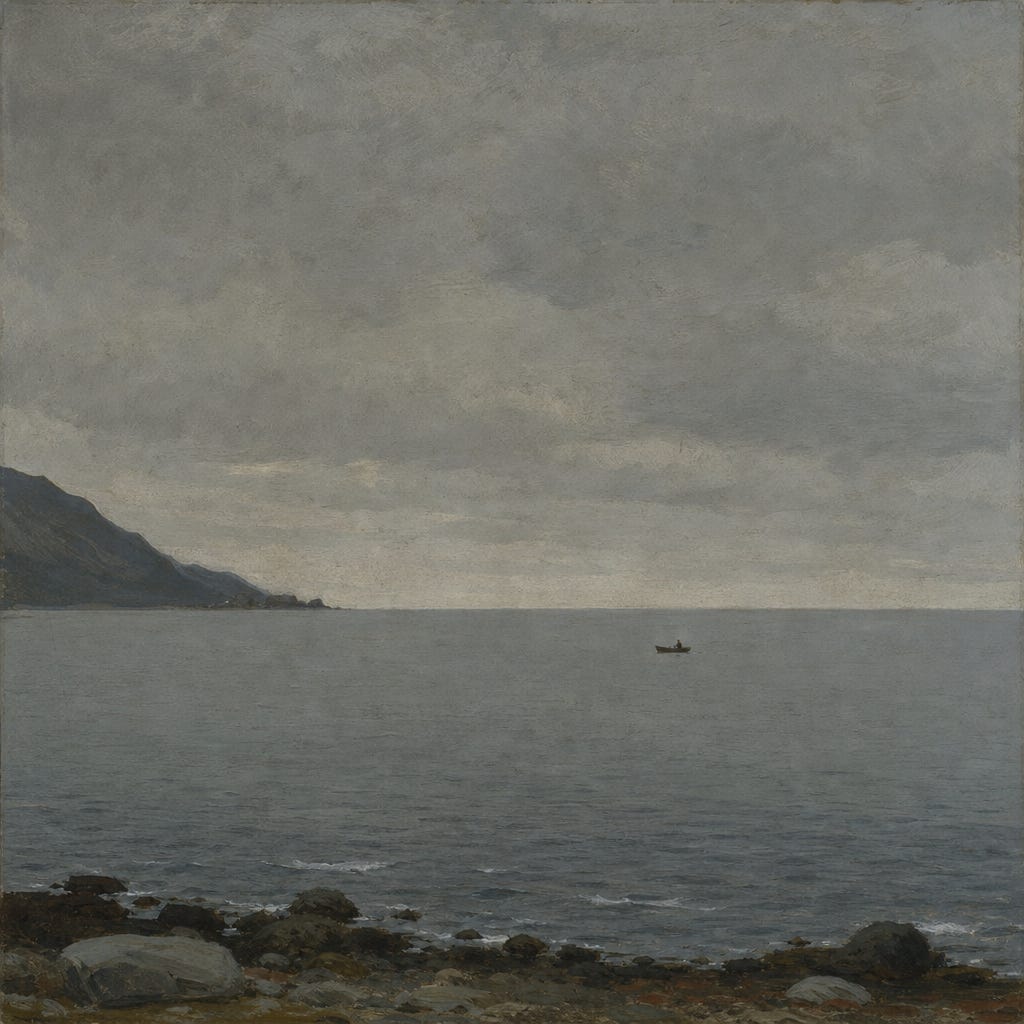
Nostalgia lets you return to places that no longer exist but in your heart.
I have this line written in one of my Commonplace books but, as is often the case, without attribution. (Maybe I thought it up? Unlikely.) However it got there, I would now change it to: “in your heart’s imagination.” That has the added benefit of vagueness which is a hallmark of nostalgia.
But however nostalgia is defined, it implies a separation. There is the land and there is the water. There is now and there is then. And as the now becomes compressed, the then continues to expand.
II. Age is exile
The word exile is a loaded word. So, I want to be careful how I frame this. I want to do this with respect for those who have experienced exile from their countries of origin (such as refugees), for those who have suffered emotional exile from families, even those who experience spiritual exile, cut off from meaning or contact with transcendence.
(If this sounds “woke,” then good. It’s about time that word is reclaimed.)
The exile to which I am referring is existential exile.
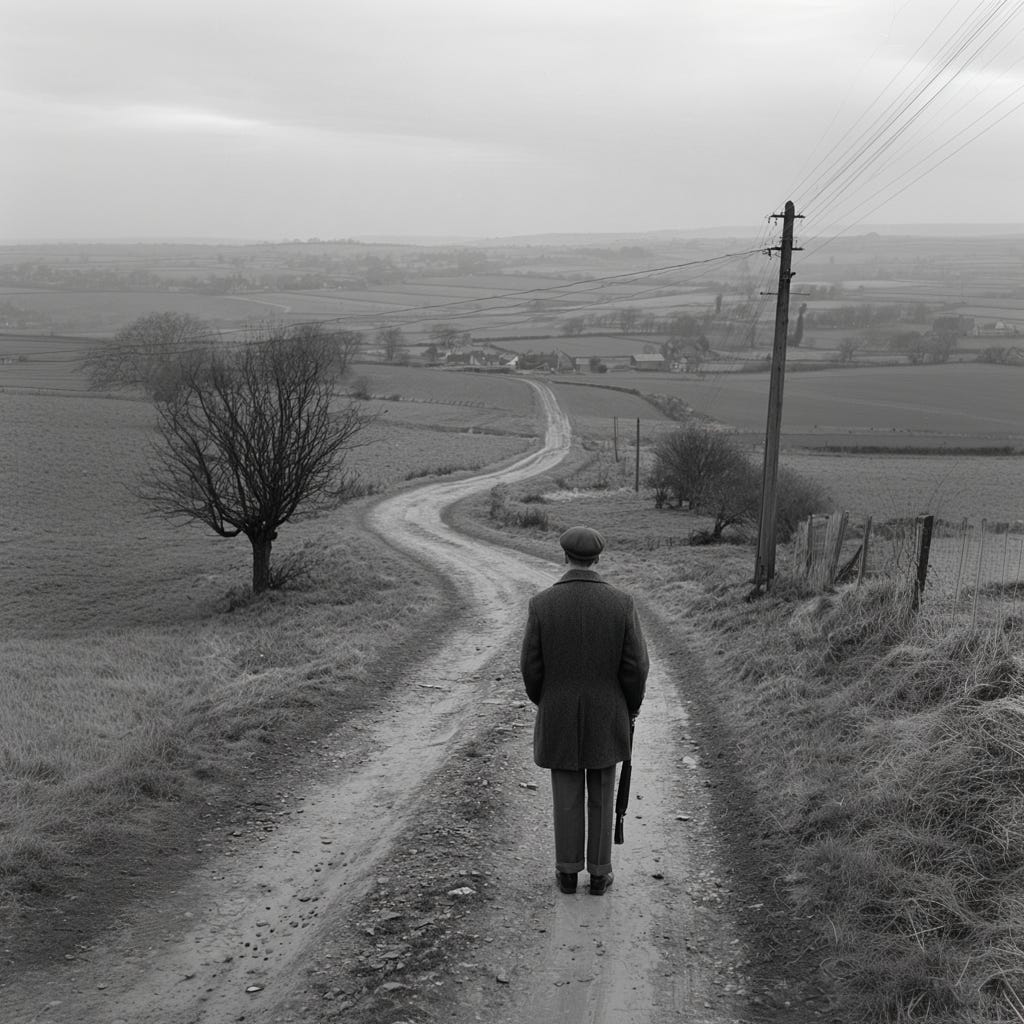
Exile literally means to be separated from your soil—your ground of being, your homeland. All of the Hebrew Bible, I would argue, is built around exile and return.
I did not have the slightest inkling of this when we moved, now more than a decade ago, more than a hundred miles from where I had grown up. I am a transplant here in the Berkshire hills. The soil here is not my soil.
To be human (from humus, Latin for earth, soil) means acknowledging that the longest relationship we will ever have, the most intertwined we will ever be—far more than with our spouses, friends, children, grandchildren—is with the soil. (Yes, this could be the air or the ocean, but hang with me here.)
In Genesis, God forms Adam from the ground:
Then the Lord God formed האדם (ha-adam, the human) from the dust of the אדמה (adamah, the ground/earth).
- Genesis 2:7
Occasionally, I drive by the cemetery in our little town. And I wonder: is this the soil in which I will dwell? Even though I have no belief in a conscious afterlife, I think: this is terrible. I won’t know anybody here. I will have to make small talk.
(This would be, quite literally, hell for me.)
Until I was 18, I lived in the city of Boston. Not the suburbs which I would later inhabit. The city itself, Roslindale to be precise. I knew the city like the back of my hand. Carl Jung would say the geography—the soil—of that city was imprinted on my mind. Later, I would move, many times, but the map in my head was always the city of Boston. Also, the house I grew up in up in, the soil in that backyard (which regularly traveled into the house on my clothes), that is still my home.
That first house becomes the template. Every other place I’ve lived is a palimpsest — a rewritten version through which the original still faintly appears.
It may be a template, but it is also a mirage. That city no longer exists. I did a book event down at the Seaport a while back and, if I had been dropped in there on a parachute, I would not have had any idea where I was.
So, at a certain age, you may find yourself doubly in exile. This is, of course, wildly irrational. But so is this homesickness, nostalgia, and that is very real.
III. This is an old story.
Kerry and I were at the movies (yes, the theater!) last weekend. In one of the previews, I saw the “The Odyssey” is coming to a theater near you sometime this summer.
The Odyssey is the ur-story of nostalgia, of homesickness.
Odysseus has been away from home for ten years, fighting at Troy, when he begins his 10-year odyssey home. This journey doesn’t progress smoothly, unless you consider encountering a Cyclops, cannibals, and six-headed monsters a smooth journey.
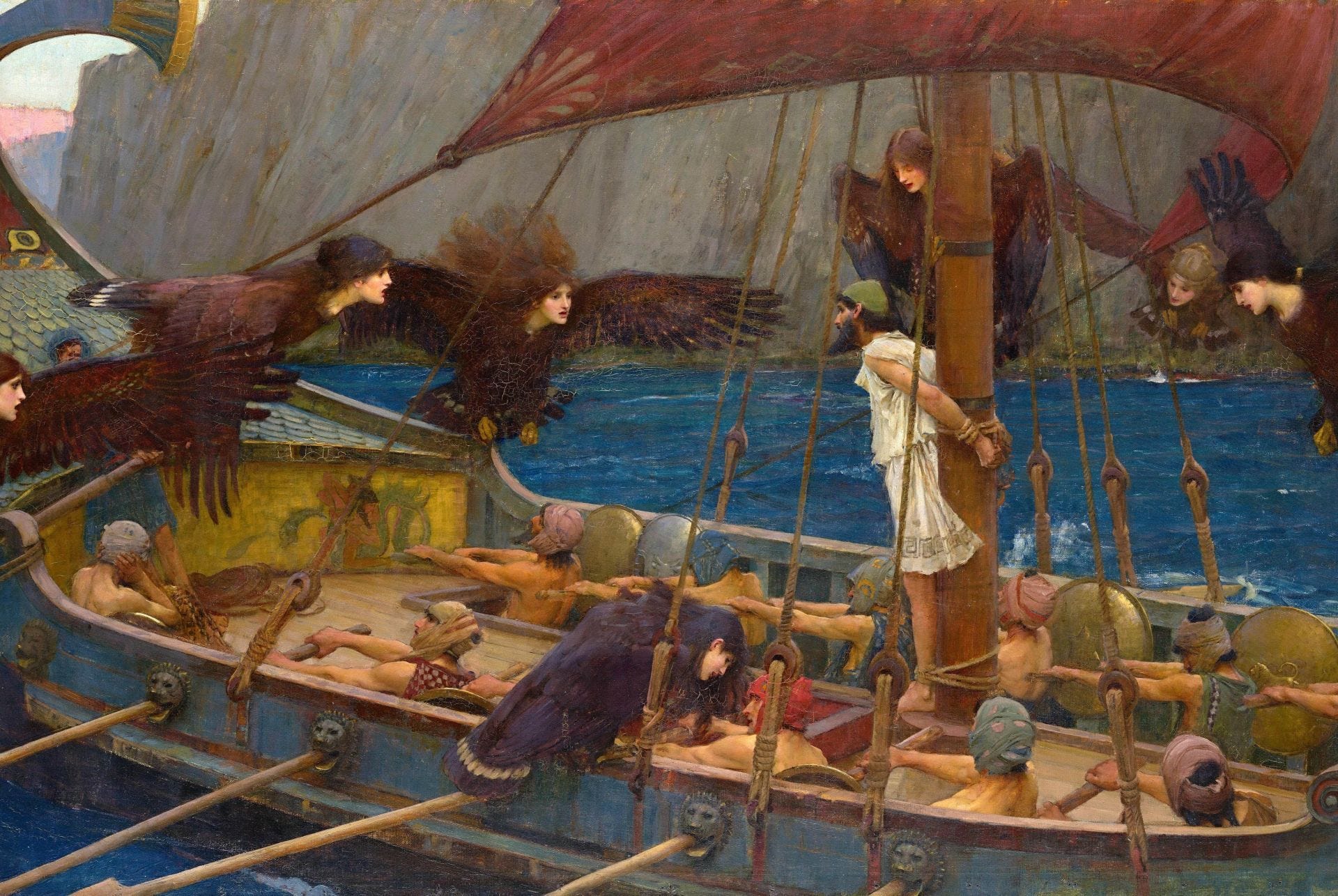
This plot line is perhaps the most well-used in all of storytelling. It is the spine of works as disparate as Cormac McCarthy’s The Road to The Wizard of Oz. Take any five fiction books out of your bookcase, and I guarantee at least three of them will utilize this idea in some way.
This homesickness, too, is irrational. The phrase “you can’t go home again” is hardwired into the American psyche. Because it’s true. But also misunderstood. There are two moving parts in that phrase—“home” and “you.”
It’s not just home that changes, it’s you—me—that changes. Even if you could go home again, you are not the same person. We are all scarred and wounded and the way we remember things is, almost certainly, faulty.
Because nostalgia is not about a literal past. It is an ache for coherence, for a world that made meaning. Which is an illusion.
Nostalgia is rarely about a literal past. It is about the ache for coherence. For a time when the world felt whole, meaningful, inhabitable.
This is why the boat has no oars: you cannot go back home again.
IV. Age and (in)visibility.
Being “seen” crops up all over the place. Even in the outrageous, farcical road-rage-driven series “Beef” (well worth watching, if only for the send-up of the American Dream), there is a tender moment between the two antagonists where being “seen” is at the root of healing the relationship.
In Ulysses, in which James Joyce uses the map of the Odyssey, invisibility is at the core of Leopold Bloom, the hero. He moves through the streets of Dublin virtually unnoticed. He walks the streets, goes to a funeral, eats lunch, endures humiliation, and still retains his essential goodness, his essential compassion.
That invisibility is for Bloom, a Jew in early 20th century Dublin, a form of exile. While Irish, he is not strictly Irish. He may speak with a brogue, but in Ireland, he is still an exile.
When I was younger, a tender and callow fellow, I identified, of course, with Stephen Dedalus. Brash, ironic, intellectual, certain that intelligence was my ticket.
But now, especially living in the United States, I have grown to appreciate Bloom. His ordinariness (another form of exile in this culture) is so beautifully rendered. It is his compassion that saves Stephen. What saves Bloom—what saves anyone—is the capacity to feel something on behalf of someone else. That capacity requires rich soil. And the soil is changing.
V. Age and exile from country.
Many of the nutrients in the soil that nurtured us have leeched out—honor, respect, compassion, self-deprecating humor, appreciation for community.
Many of my fellow citizens worship a golden fatted calf. And they are down on their knees before it, in their red hats and their righteousness, obnoxious, judgmental, patriarchal smugness.
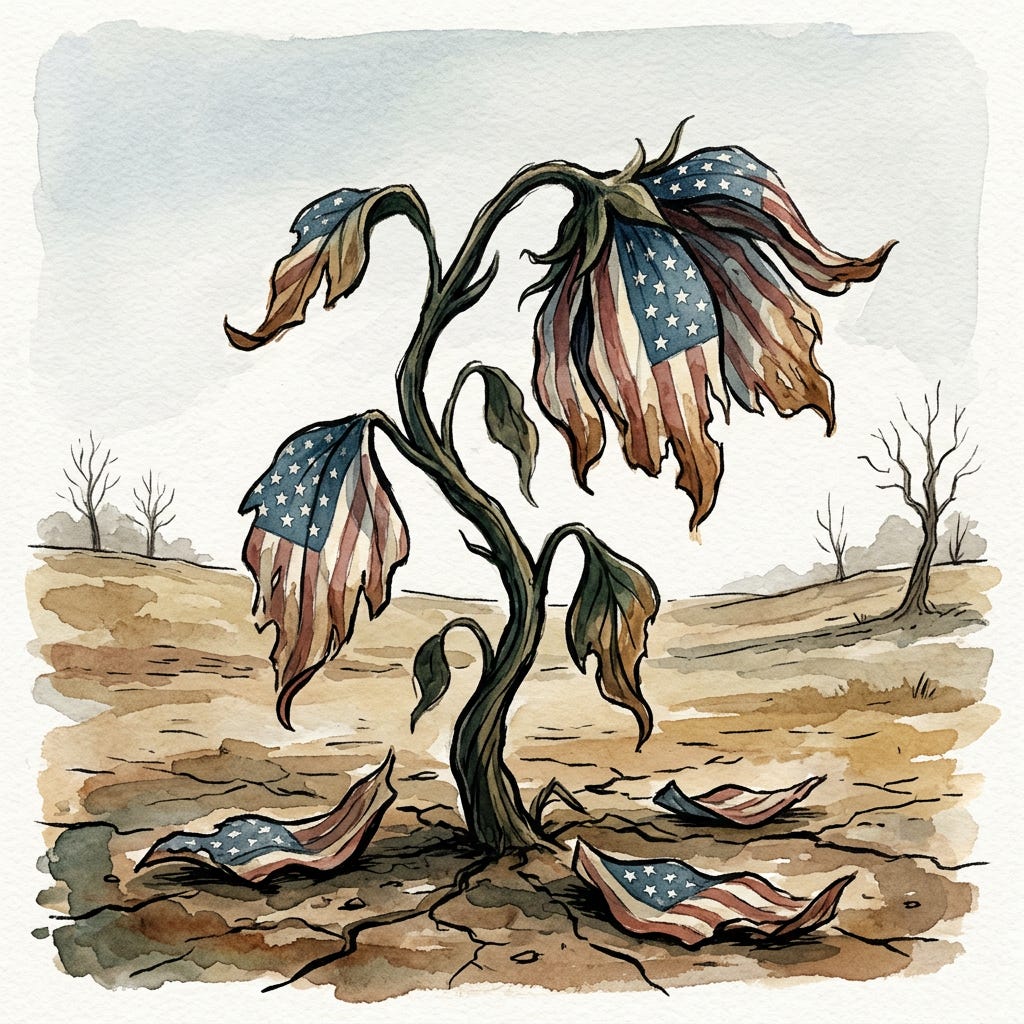
The Israelites, at least, had the decency to feel ashamed when Moses came down from the mountain.
Real humor, also, has disappeared. This is not a small thing.
Humor requires self-awareness, the ability to stand outside yourself and see the absurdity. It requires, at minimum, a theory of other minds. That is absent.
They have no use for art. Art asks you to feel something on behalf of someone else. This, too, is beyond them. At the University of the Kitchen Table, where I did undergraduate and graduate work among my relatives, that is what made them essentially good people. Their soil was rich, imaginative, creative, and life-giving.
I no longer recognize the country I was born in. The soil is wrong. The air is wrong. I am, in the most literal sense I know, in exile.
And unlike Odysseus, I am not sure there is a home to sail back to.

I released this song, “Gone,” last week. It had a bit of a different vibe then.
But after today’s essay, the interpretation is up to you.
The download is free, below.
No paywall—ever. If this piece speaks to you, share it.